

Copper prices remain elevated as the market eases from September highs
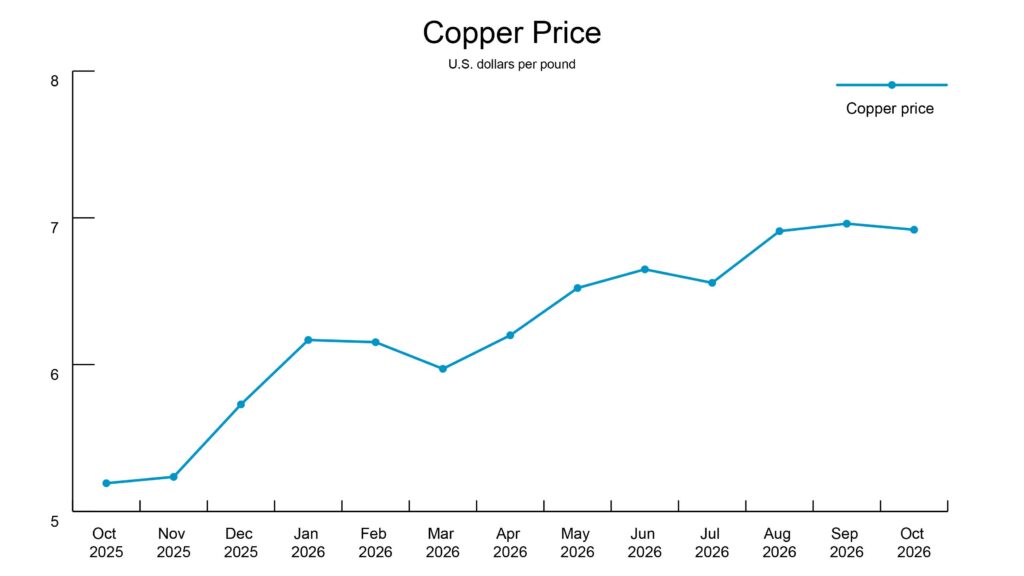
Copper prices cooled slightly in October as the market eased from record highs in September, which saw two price increases on copper wire.
Despite the cooling, copper continued to trade at elevated levels throughout October, with the monthly average on the London Metal Exchange (LME) reaching approximately $14,532 per metric ton or $6.59 per pound, up nearly 36% from the previous year. LME warehouse inventories also increased, although global supply availability and regional inventory differences remain important factors to watch.
Why it matters: Although prices have cooled from September, strong demand continues to support the market, and suppliers implemented one price increase in October. Copper remains sensitive to global supply conditions, mine disruptions and demand from hyperscale projects. Near-term supply concerns are also a driver, with a major miner’s Chilean copper production falling to its lowest third-quarter level in nearly two decades due to extreme winter weather disrupting production.
By the numbers:
- The average weekly price of copper from August to October ranged from a high of $6.70 per pound to a low of $6.52 per pound.
- The average year-to-date price for 2026 is $6.15 per pound, compared to $4.51 per pound in 2025.
- This morning, copper opened at $6.25 on COMEX.

China’s rising aluminum output helps offset global supply disruptions
Major aluminum producers in the Persian Gulf are still working to restore damaged facilities and establish alternative export routes that bypass the Strait of Hormuz amid the ongoing conflict in the Middle East.
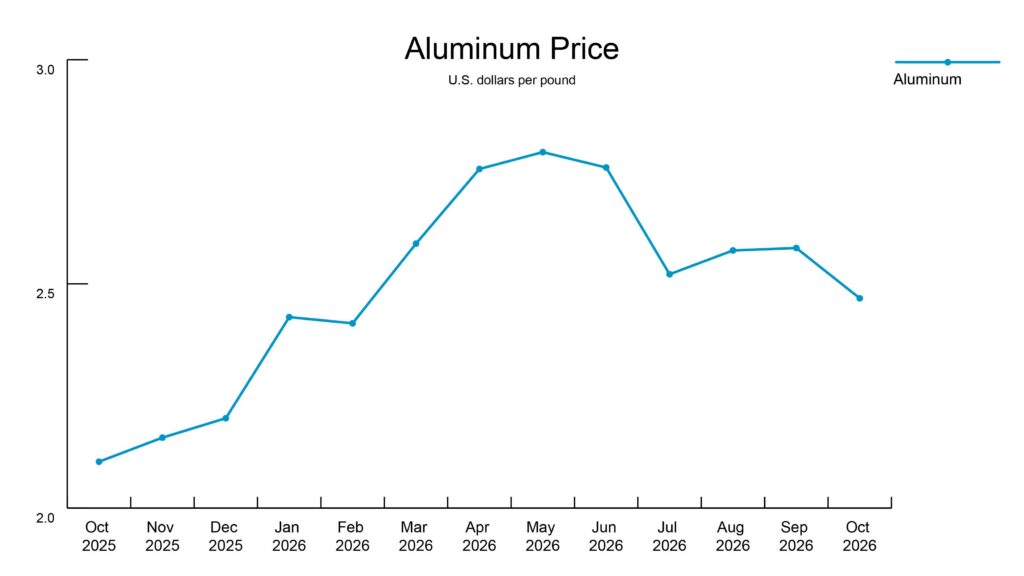
The big picture: Meanwhile, Chinese smelters have increased production despite rising energy costs. China’s aluminum exports rose 16% in the first eight months of the year, helping offset global supply disruptions caused by the conflict.
Additionally, Indonesia is expanding its domestic refining and smelting capacity; its aluminum production is expected to rise from 619,000 tons in 2025 to four million tons in 2030, while alumina production is projected to more than double to 9.1 million tons.
Looking ahead: Analysts expect global aluminum supplies could move into a surplus in 2027 as Middle East production recovers and Indonesia increases its capacity.
This morning, aluminum opened at $2.50 per pound.

Suppliers push price increases across steel categories
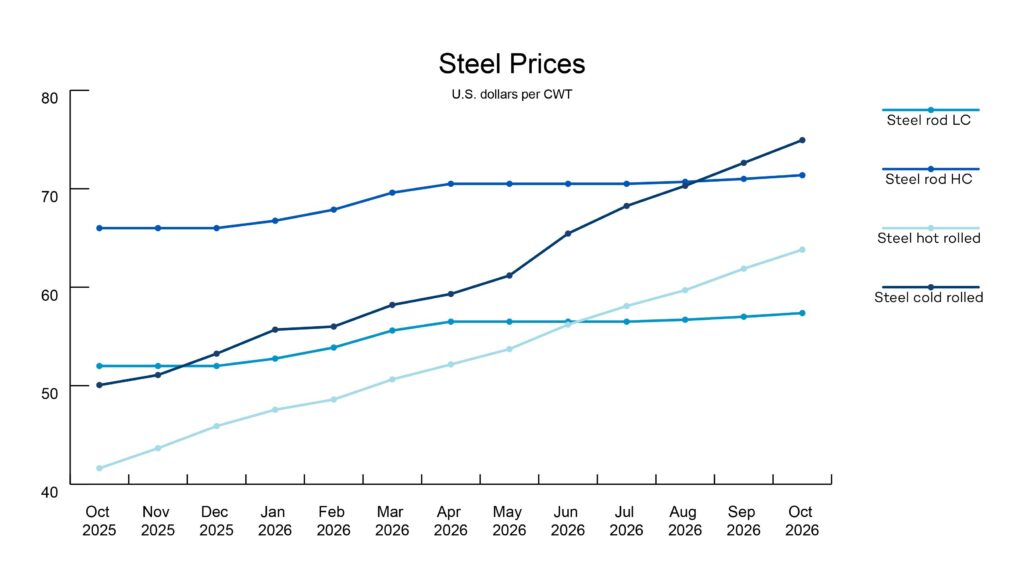
November began with suppliers implementing 5% to 10% price increases across steel categories.
What’s happening: Strong demand from hyperscale projects continues to strain manufacturing capacity, keeping backlogs elevated and lead times extended. Early planning remains essential for large projects, particularly those requiring larger-diameter conduit.
The big picture: Domestic steelmakers, such as Cleveland-Cliffs and Steel Dynamics, reported strong third-quarter profits due to lower import levels, steady demand and tight availability supported the U.S. steel market.
More steel news: Trade talks between the United States and Mexico reached an impasse over potential reductions to the Section 232 tariffs, including the 50% tariff on steel and aluminum. The proposed agreement included reductions to automobiles, steel and aluminum tariffs, but new rates for steel and aluminum had not been determined.

Larger-diameter PVC pipe and conduit continue to see extended lead times
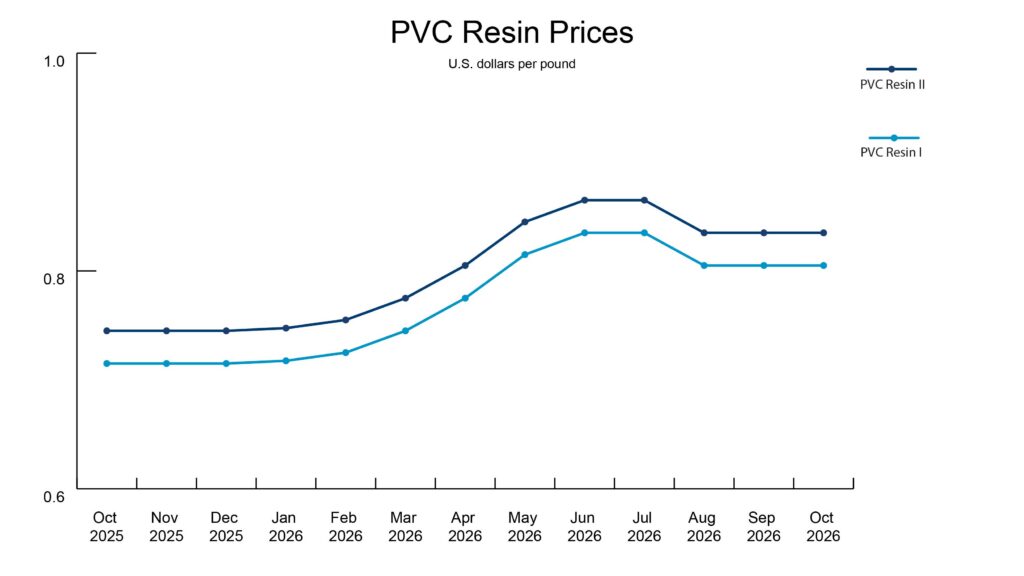
Suppliers announced price increases at the beginning of November due to higher resin costs and continued high demand from hyperscale projects.
Between the lines: Resin costs remain elevated and continue to be influenced by feedstock costs, transportation expenses and construction-related demand.
By the numbers: Two-inch diameter and smaller pipe face a two- to four-week lead time, while three-inch and larger face an eight- to 12-week lead time.
Why it matters: Hyperscale demand continues to drive significant volumes of PVC conduit and pipe, supporting pricing and extended lead times on larger-diameter products.
News roundup
The Federal Reserve (Fed) voted 10 to 2 to hold interest rates steady, keeping the federal benchmark range between 3.75% and 4% after increasing rates in September. The Fed will meet again Tuesday, December 8, and Wednesday, December 9, for its final meeting of the year.

Go deeper with the 2026 State of Commodities Report
Some of the market factors highlighted in this month’s Commodity Update are explored further in the 2026 State of Commodities report.
Zoom in: Our report takes a deeper look at the forces shaping the price and availability of copper, aluminum, steel and PVC, as well as what to watch for in 2027.
Why it matters: No one can predict exactly what will happen with commodities, but understanding what’s driving these key commodities can help you plan for the year ahead.