

Strong demand from data centers drives rising copper prices
Rising copper, compound and freight costs are affecting all copper wire categories tied to data centers and other hyperscale projects.
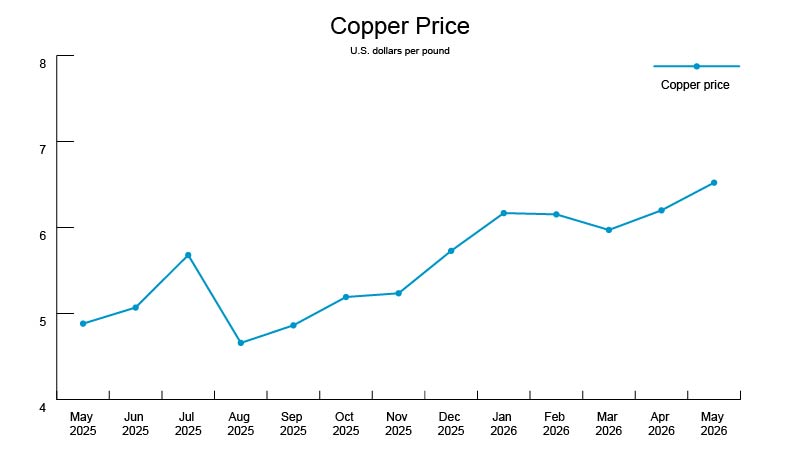
By the numbers: U.S. copper futures on the COMEX have surged close to 40% in the past year, reaching a record $6.65 per pound before easing slightly. This morning, copper opened at $6.31. The year-to-date average price is $5.91, compared to $4.82 in 2025.
Yes, but the copper market remains sensitive to supply disruptions as miners struggle to meet growing demand from electrification and data centers.
A 6.9 magnitude earthquake struck Chile’s Antofagasta region, a key area for the country’s copper production, causing temporary disruption but minimal damage to critical infrastructure.
Why it matters: Copper is already facing tightening global supply, with disruptions from mining incidents and limited new mining developments. Production timelines for new mines can take decades, making it difficult to respond quickly to rising demand.
A recent J.P. Morgan report forecasts a 2 million-ton supply deficit by 2030, potentially widening to 8 million by 2035.
The bottom line: Demand can continue to outpace supply. Suppliers and analysts expect copper prices to continue to climb, though they will fluctuate in a roller coaster pattern, making it difficult to know for sure what the market will do.

Aluminum supply disruptions continue
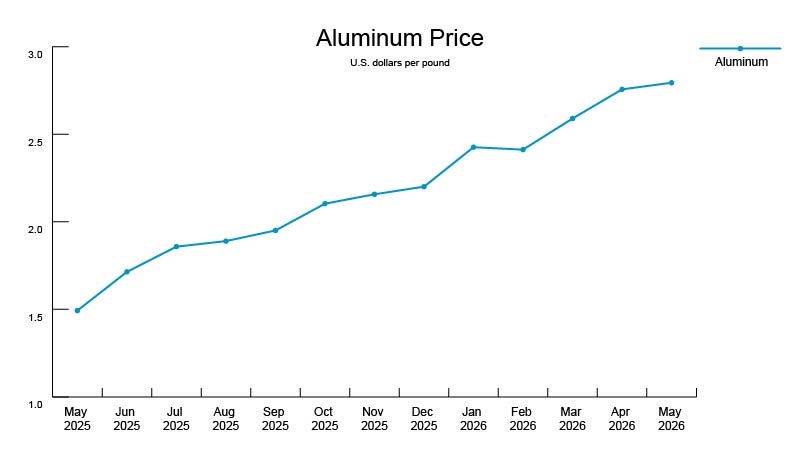
Aluminum prices surged to their highest level in late May since March 2022, driven by ongoing disruptions in the Middle East and concerns of production cuts in China amid a nationwide inspection of energy emissions.
Why it matters: The price increases underscore global supply challenges and geopolitical tensions affecting the aluminum market that impact industries, such as commercial U.S. solar customers, who face rising installation costs as disruptions to aluminum supply push up prices for solar racking systems.
The big picture: The conflict in the Middle East has affected refining facilities and shipping routes, pushing aluminum prices on the London Metal Exchange up by 15% and COMEX futures to more than 30% since late February. Today, aluminum opened at $2.83, and the year-to-date average is $2.57 compared to $1.78 in 2025.
Across the globe, Canadian aluminum exports are shifting to Europe due to higher premiums and U.S. tariffs, intensifying competition and further driving up costs. Aluminum smelters in China are already operating beyond capacity and face potential production cuts due to government inspections on energy use and emissions.

Suppliers announced a steel pipe price increase in early June
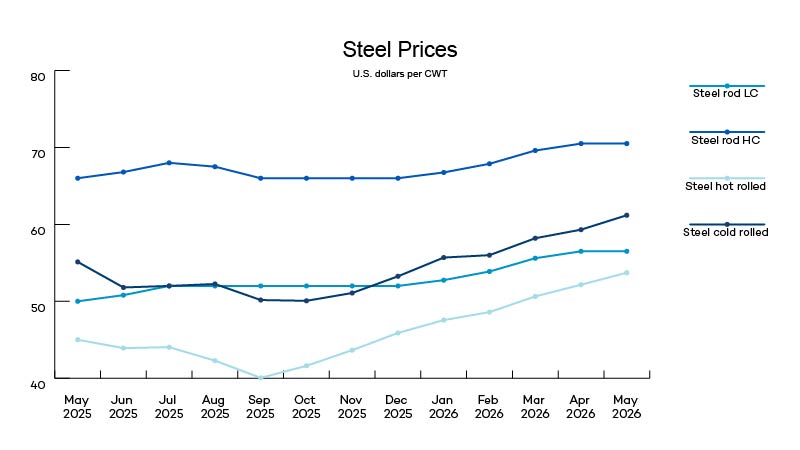
Steel suppliers started June with a 7%–10% increase on electrical metallic tubing (EMT) and galvanized ridged conduit (GRC).
Why it matters: Due to the rise in demand for data center construction and other hyperscale projects, delivery lead times vary by product and size. For EMT and GRC, lead times are approximately five to six weeks and eight to 12 weeks for colored EMT.
More steel news: Mexico is seeking to remove the U.S. tariffs on steel and aluminum imports altogether as part of its ongoing USMCA negotiations. The three countries are expected to meet officially Wednesday, July 1, for a joint review of the agreement.

Vendors react to the growing PVC market
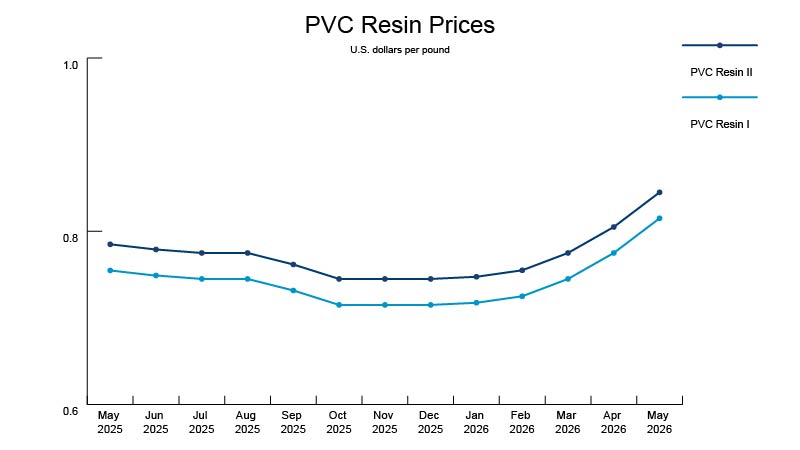
The PVC market is experiencing significant growth driven by demand from the construction sector, particularly data centers.
Why it matters: Vendors are reacting to this growth by pushing for price increases once or twice a month, citing heightened demand for data centers and other hyperscale projects.
By the numbers: Lead times for large-diameter and special-radius bends are five to 10 weeks and two to four weeks for 4-inch diameter and smaller.
News roundup
The Federal Open Market Committee will meet Tuesday, June 16 and Wednesday, June 17. Some Federal Reserve officials believe the monetary policy and federal funds benchmark rate currently set between 3.5% and 3.75% are in the right place given how high inflation is.