

Copper pushes past price ceiling
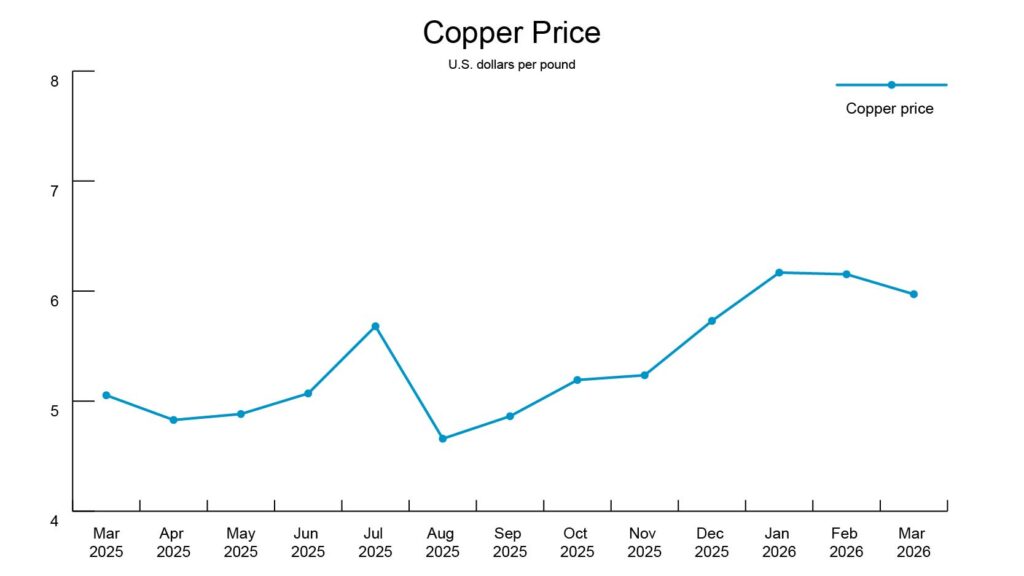
Copper has surpassed its price ceiling in the past few months, driven by demand in China and rising global demand for electrification — including data centers and renewable energy — and by supply disruptions from several major mines and constrained supply growth.
By the numbers: Some forecasts suggest prices will remain elevated through 2026 and should ease in 2027. Total inventories across the three major exchanges rose more than 60,000 metric tons in February.
Why it matters: Many believe new price ceilings for copper have yet to be established because of the current strong demand for hyperscale projects, which could persist for seven to 10 years.
The big picture: Despite strong demand, supply growth is modest due to declining ore grades and long mine development timelines. Some new capacity is coming online; major producers are expanding and focusing on copper production to capitalize on the robust demand.
- A new copper project in Arizona by Taseko Mines is ramping up production, targeting 85 million pounds of copper cathodes annually, which could make it the third-largest U.S. producer of refined copper by the end of the year.
- The U.S. Forest Service has finalized a land swap with Resolution Copper, effectively clearing the way for mine development while pending state permits. The company believes the project could supply 25% of U.S. copper demand.
- Prysmian is considering building a second copper rod facility in Texas in the coming years to meet the surging demand for data centers and electrification.
- In Chile, an antitrust regulator has approved a joint mining plan between Codelco and Anglo American, which is expected to boost annual copper production by 120,000 metric tons, pending environmental and other regulatory approvals.
This morning, copper opened at $5.87.

Higher energy costs add pressure to aluminum prices
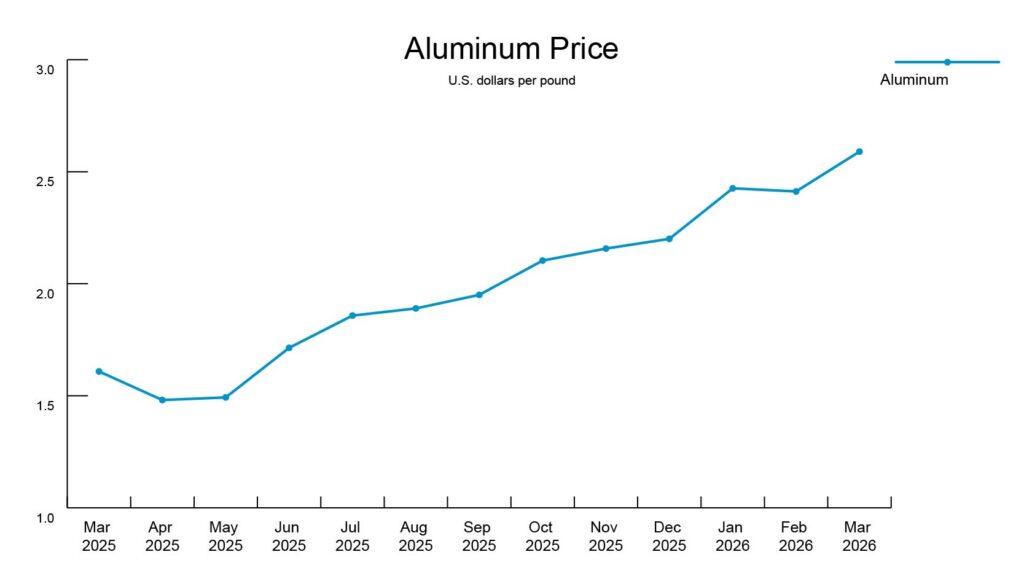
The conflict in the Middle East has increased energy costs, including oil and natural gas, which is also driving up aluminum prices because producing aluminum requires a lot of energy.
Why it matters: The Middle East accounts for approximately 9% of global aluminum production and supplies a significant share of imports to the United States and Europe.
Zoom in: Aluminum prices jumped after major aluminum producers in the Middle East reported damage from the ongoing conflict, raising concerns about prolonged supply disruptions.
By the numbers:
- Aluminum hit four-year highs in late March. The European physical premiums also rose to cover freight and handling costs.
- In the United States, the Midwest Premium remained above $1.00 per pound, already trading at record highs due to U.S. tariffs before the conflict in the Middle East began in February.
- The year-to-date average for aluminum increased significantly, from $1.78 in 2025 to $2.46 this year.
- Today, aluminum opened at $2.71.

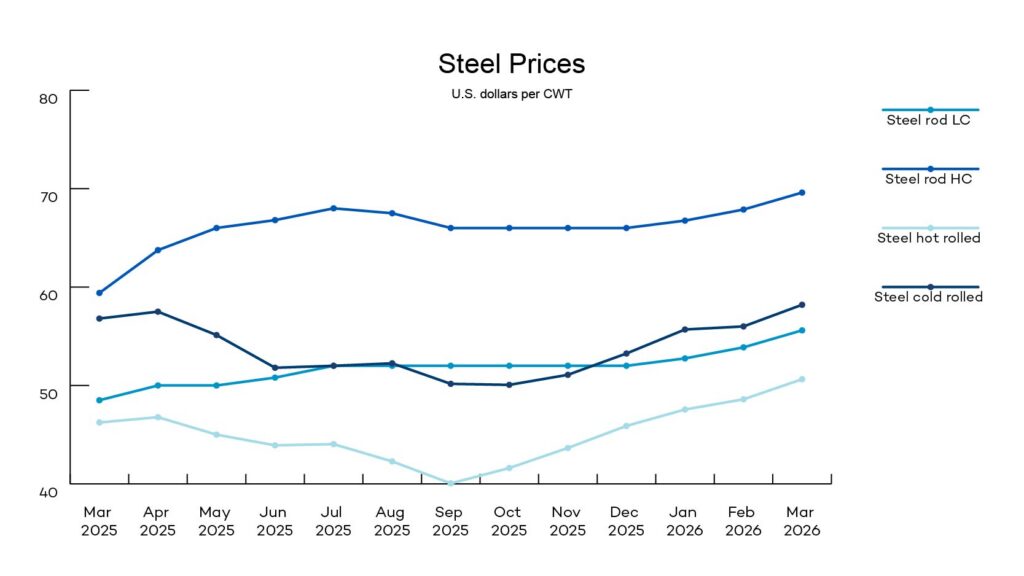
U.S. steel shipments rose 5.1% year over year in February
The American Iron and Steel Institute reported a 5.1% increase in U.S. steel shipments in February compared to the year prior.
By the numbers: Shipments declined 2.5% month over month. Shipments increased by 3.5% year to date in 2026 from the same period in 2025. Despite the overall increase, shipments of cold-rolled sheets and strip declined by 8%.
The World Steel Association reported global crude steel production across 69 countries declined by 2.2% year over year in February.
Zoom in: Production in China fell by 3.6%, while India’s output rose by 7.7%, and the United States saw a sharp year-over-year increase of 55.8%.
The big picture: Some regions, such as North America and India, recorded production increases, while others, including Russia and South America, experienced declines.
More steel news: Thyssenkrupp Steel urged the European Commission to protect the domestic grain-oriented electrical steel production, a key material used in power grids, from cheaper imports from Asia. The European Union launched a safeguard investigation into the product, a first step welcomed by Thyssenkrupp.

Conflict disrupts the global resin market
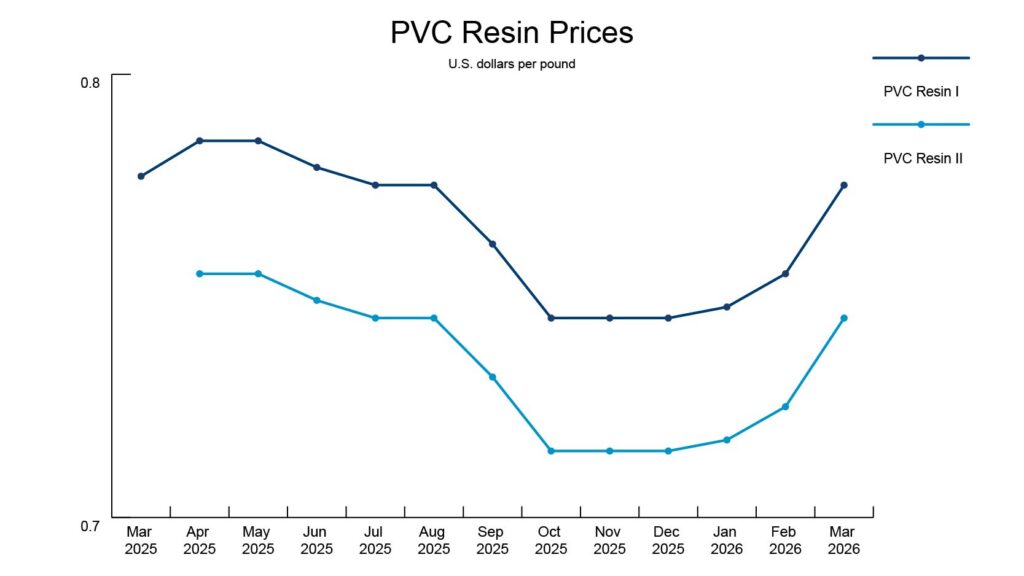
The ongoing conflict in the Middle East and its impact on crude oil prices is also driving high resin costs globally, causing significant disruptions in resin and chemical markets, pushing prices to around four-year highs.
Why it matters: The Strait of Hormuz is a critical passageway, with roughly $20 billion to $25 billion worth of petrochemical products passing through annually. The ongoing conflict is pressuring buyers to seek alternative materials at higher prices.
Zoom in: Domestic PVC price levels are staying stable this week, though another increase is expected before the end of April.
News roundup
The Federal Reserve (Fed) held interest rates steady between 3.5% to 3.75% in March. Approximately three-quarters of surveyed economists predict the Fed will keep interest rates steady, at least until September, despite ongoing inflation concerns stemming from the conflict in the Middle East. Even before the conflict began, inflation was a percentage point above the Fed’s 2% target. During the March meeting, Fed officials emphasized that elevated inflation risks remain a high priority. Officials will meet again Tuesday, April 28, and Wednesday, April 29.