

Supply chain impacts from the U.S.-Israel conflict with Iran
On February 28, the United States and Israel conducted joint military strikes on Iran. Iran responded with attacks against U.S. forces, Israeli territory and infrastructure in several other areas.
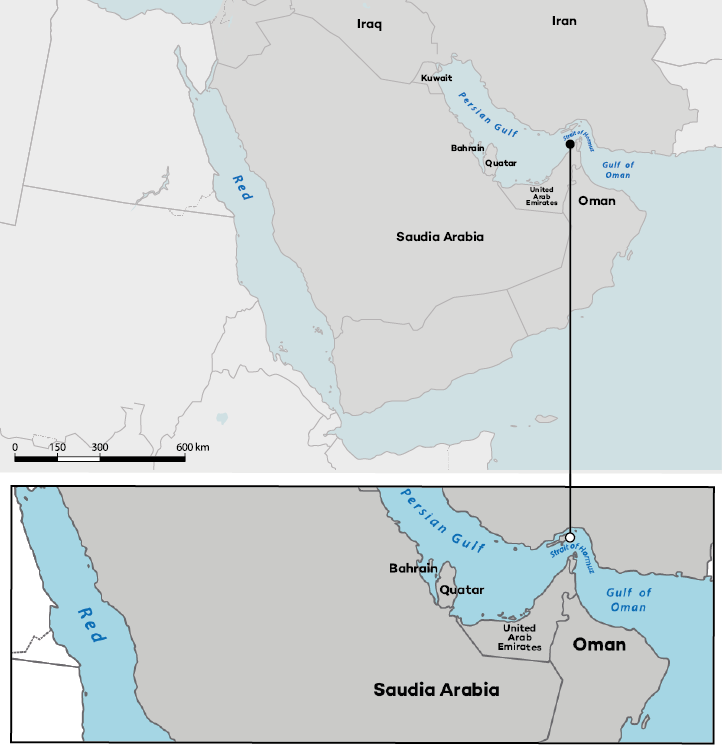
The big picture: Military engagements have continued, with strikes affecting energy and logistics infrastructure across the Persian Gulf, including multiple Iranian oil storage facilities.
Why it matters: These attacks on energy infrastructure, combined with threats to the Strait of Hormuz and regional export routes, have contributed to crude oil prices surging above $100 per barrel, a level not seen since 2022. Member countries of the International Energy Agency announced March 11 that they will release 400 million barrels of oil from their strategic reserves, the largest on record.
Additional potential impacts to the supply chain can contribute to extended lead times, inflated costs and increased uncertainty.
- The Strait of Hormuz, a key maritime corridor for energy exports, has seen significant disruption to commercial traffic as shipping firms suspend transport.
- Ship diversions around Africa’s Cape of Good Hope are extending transit times for bulk and container cargo.
- Regional attacks have affected port operations and other logistics. Constrained tanker movements and raised transit costs can also affect freight rates and insurance premiums.
- Iraqi oil production and exports have declined sharply amid the conflict and constrained tanker access.
- In the energy markets, cuts in Persian Gulf crude and liquefied natural gas exports tightened supply and increased fuel prices. Crude oil produced in the Persian Gulf accounts for roughly 25% to 30% of total global oil output.
The bottom line: Despite ongoing efforts to deescalate direct military confrontation, no cease-fire framework has been formally agreed upon, and military activity remains active around Iran’s borders and the Strait of Hormuz.

Rising conflict risks ocean freight service reliability
Ocean freight markets have largely stabilized in March following early-year volatility, with container rates remaining relatively flat across major trade lanes.
Why it matters: This stabilization reflects balanced global capacity, normalized U.S. import demand and disciplined carrier capacity management. While pricing remains at or below historical levels, carriers continue to actively manage supply through blank sailings, attempts at general price increases and network adjustments to protect rate floors.
Yes but: Despite stable pricing, service reliability remains uneven. Transit times and schedule consistency continue to vary as carriers adjust routing and capacity in response to the geopolitical risk in the Middle East. Elevated conflict, particularly around the Strait of Hormuz, introduces ongoing risk to fuel costs, maritime insurance premiums and network predictability even in the absence of immediate rate escalation.
The conflict has revived concerns over potential Houthi rebel attacks in the Red Sea, which compound the risk of extended diversions, and further upward pressure on global freight rates.
While U.S. import volumes remain seasonally stable, the disruptions around the Strait of Hormuz introduce schedule unreliability, longer transit times and routing volatility.
- In February, U.S. container imports totaled 2.1 million TEUs, down 10% from January and 6.5% year over year, reflecting a normal post-holiday seasonal decline and some weakness in demand.
- S. container import volumes remain below prior-year levels, driven by cautious inventory strategies and ongoing supply chain diversification.
- China-origin imports fell sharply, down 5.5% month over month and down 17% year over year. Despite this softening, China still accounts for nearly 35% of all U.S. import volumes.
- Port transit times showed moderate changes, with no indication of widespread congestion across U.S. ports.

Heightened uncertainty and demand are driving commodity prices higher
Global commodity markets have seen price increases across a range of core materials, reflecting the impacts of geopolitical tensions, U.S. trade policy shifts and rising demand.
Zoom in: Heightened uncertainties in international trade and the supply chain, notably the conflict in Iran and the Strait of Hormuz, have increased volatility. And robust demand from hyperscale infrastructure and data center projects has tightened supply, further reinforcing upward price pressure.
Quick catch-up: The U.S. Supreme Court’s decision regarding President Trump’s use of the International Emergency Economic Powers Act to impose tariffs does not affect copper, steel and aluminum tariffs. Those sector-specific tariffs were imposed under a separate authority, Section 232 of the Trade Expansion Act of 1962, and remain in effect.
Commodity roundup:
- Despite a 23-year high in global copper inventories, prices have reached unprecedented levels this year, driven by demand for hyperscale projects and supply disruptions at major mines in late 2025.
- Aluminum prices have reached a new high for the year on the London Metal Exchange, driven by concerns over supply disruptions from the escalating conflict in the Middle East. Experts say the scale of any supply disruptions depends on how long the conflict persists.
- In early March, 3/4-inch steel pipe increased 7% to 10% nationally, driven by higher demand for data center construction and the ramp-up to the spring construction season.
- The PVC market also saw prices rise 7% to 10% in early March, while resin rose 1% in February. The resin market is expected to grow by nearly 5% by 2035, driven by demand in the packaging and automotive sectors, underscoring an increased reliance on lightweight, durable materials across a range of vital industries.
- Lumber futures marked a six-week low, declining toward $550 per thousand board feet. The North American housing sector remained sluggish, with demand weakening, as January data showed a 7% year-over-year decline in single-family starts and an 8.4% decline in units under construction. On the supply side, regional inventory remained elevated. The total 45% tariff on Canadian softwood lumber also affected demand and builder confidence in the market.
- Western Texas Intermediate crude oil futures rose more than 23% month over month to above $100 per barrel, as Persian Gulf producers started to curb output and storage facilities fill, following disruption in the Strait of Hormuz and heavily restricted tanker traffic. The previous time prices rose to above $100 per barrel was after Russia invaded Ukraine in 2022.

The partial U.S. government shutdown is still at an impasse
The partial U.S. government shutdown began February 14, impacting funding for the Department of Homeland Security (DHS) and its agencies. The DHS shutdown stems from an impasse over DHS immigration enforcement and related reform policies.
Zoom in: As of early March, the partial shutdown entered its fourth week. The House approved a bill to fund DHS through the fiscal year, while a similar bill was blocked in the Senate. The DHS shutdown impacts services, such as the Transportation Security Administration, which has approximately 50,000 of its employees working without pay, leading to long security lines at major airports and rising employee absenteeism.
Why it matters: The partial government shutdown could indirectly influence the Federal Reserve (Fed) interest rate decisions by disrupting economic signals and weakening confidence. With federal agencies, such as the Bureau of Labor Statistics and the Census Bureau, delaying the release of key data.
Many economists predict the Fed will likely hold rates between 3.5% to 3.75% at its next meeting — Tuesday, March 17 and Wednesday, March 18. This was also the case during their January meeting, where the benchmark interest rates were held.
The state of the labor market: The United States shed 92,000 jobs in February, falling short of the reported 126,000 jobs gained in January. The current economic environment, marked by fluctuations in oil prices and geopolitical tensions, suggests a cautious yet stable labor market, signaling a period of softening rather than abrupt weakness.
- The unemployment rate rose to 4.4%, from 4.3% last month. The labor force participation rate fell slightly to 62.0%, showing little change from last month.
- The construction sector lost 11,000 jobs but has been bolstered in recent months by growing demand for new data centers. And manufacturing lost 12,000 jobs.
- In February, the Consumer Price Index remained unchanged year over year at 2.4% and rose 0.3% month over month.
- In January, the Producer Price Index rose 2.9% year over year and 0.5% month over month.

New CDL regulations reshape capacity availability
The U.S. trucking market is showing clear signs of tightening through the first quarter of 2026, driven less by demand growth than by structural capacity constraints.
The Federal Motor Carrier Safety Administration’s final ruling on non-domiciled CDL regulations takes effect March 16, tightening driver eligibility. Legal challenges with the policies continue, but many carriers and states have proactively incorporated fleet and hiring practices that are already impacting driver availability.
Why it matters: Regulatory enforcement continues to influence capacity availability. While overall freight volumes remain relatively stable, stricter CDL driver regulations, slower fleet replacement and ongoing carrier exits are placing upward pressure on rates and availability, particularly in weather-impacted regions and specialized equipment segments.
The big picture:
- Flatbed capacity remains notably constrained, especially in lanes tied to construction, energy and infrastructure activity.
- Load-to-truck ratios have increased significantly through the first quarter and are up 90% from March 2025 and 300% from 2024, signaling reduced flexibility in securing capacity during peak periods.
- For-hire truck tonnage posted modest gains early in 2026, yet overall volumes remain below prior peaks, highlighting trucking capacity as the area of current constraint.
Recent volatility in oil markets drove diesel prices higher; per-gallon prices rose 25% over the past month, the highest daily increase since 2022.
Why it matters: This trend in oil pricing increases the likelihood of fuel surcharges and will translate to per-mile price pressure as long as fuel costs remain elevated.